
If you play volleyball outdoors on concrete, asphalt, or hard sport courts, you already know what happens to regular indoor volleyball shoes. The gum rubber outsoles that grip so well on polished gym floors start shredding within weeks on rough outdoor surfaces. It’s frustrating, and it gets expensive fast.
There’s a ridiculously large range of volleyball shoes on the market… but most of them are designed exclusively for indoor courts. The outsoles, the cushioning, even the traction patterns are all built for smooth, sprung surfaces that have some give. An outdoor concrete court has zero give, and it eats through indoor shoe outsoles like sandpaper.
Here’s what most players don’t realize: the best shoes for outdoor volleyball aren’t always volleyball shoes. Basketball shoes are designed for the exact same hard court surfaces, and they’re increasingly the top choice among outdoor volleyball players for their durability, cushioning, and traction on concrete and asphalt.
Here at Volleyball Vault, we’ve researched 8 shoes that actually hold up on outdoor courts. You’ll find a mix of volleyball-specific shoes and basketball crossovers that deliver the traction, durability, and impact protection outdoor play demands. If you play on grass instead, check out our guide to the best shoes for grass volleyball.
Let’s begin!
8 Best Shoes for Outdoor Volleyball – At a Glance
Best Overall
.
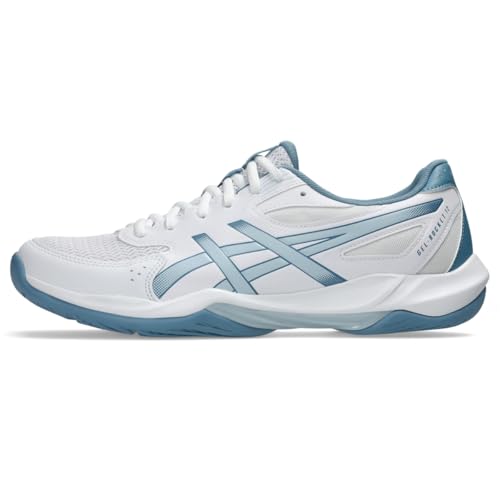
ASICS Gel-Rocket 12
Grippy, comfortable, and durable enough for outdoor courts. The most well-rounded option for mixed-court players.
Best for Outdoor Durability
.

Nike Giannis Immortality 4
Tank-like durability with rubber outsole built to survive concrete and asphalt without falling apart.
Best for Concrete Courts
.

Li-Ning Wade Flash 2
Exceptional grip on rough surfaces with plush cushioning that absorbs every rep of hard-court impact.
Best Crossover Shoe
.

Nike KD17
Smooth transitions and responsive Air Zoom cushioning in a basketball shoe that plays volleyball just as well.
Best Cushioning
.
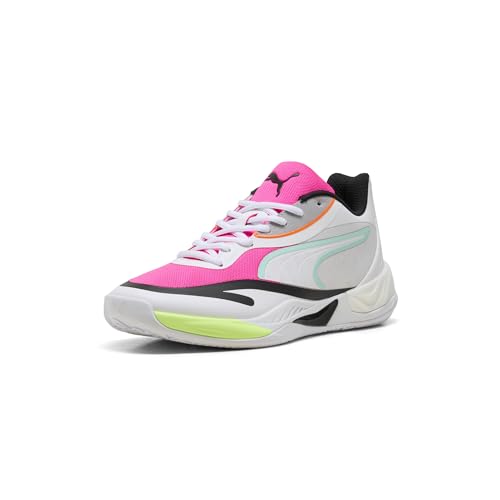
Puma All-Pro Nitro
Incredibly bouncy NITRO foam that cushions every landing, ideal for players with joint stress on hard courts.
Premium Shoe
.

Mizuno Wave Momentum 3
Wave Plate stability and aggressive traction that handles outdoor surfaces surprisingly well for a volleyball shoe.
Premium Performance
.

Nike LeBron XXI
Max Air and Zoom Air in one package delivering elite cushioning and court feel for players who want the absolute best.
Best Nike Volleyball Shoe
.

Nike Zoom Hyperset 2
Fast, stable, and volleyball-specific with enough outsole durability to handle outdoor court surfaces.
If you’re having a tough time deciding, at the end of the article I’ve included a list of the most important things to look for.
So without further ado, let’s start!
 ASICS Gel-Rocket 12
Best Overall – ASICS Gel-Rocket 12
A reliable volleyball shoe with GEL rearfoot cushioning and a grippy outsole built for players who move between indoor and outdoor courts.
The ASICS Gel-Rocket 12 earns the top spot because it does everything a volleyball player needs on outdoor courts without any major weaknesses. It’s a volleyball-specific shoe that translates well to hard outdoor surfaces, and it’s available in both men’s and women’s versions.
The GEL cushioning unit in the rearfoot is the standout feature for outdoor play. Concrete and asphalt have zero flex compared to sprung indoor courts, so every jump and landing sends more impact through your joints. The GEL unit absorbs that shock effectively without making the shoe feel sluggish or disconnected from the court.
ASICS built the midfoot with their Trusstic System, which is essentially a structural plate that prevents the shoe from twisting during lateral movements. On outdoor surfaces where you might encounter uneven patches or small cracks, that midfoot stability keeps your foot locked in place during aggressive side-to-side slides.
The outsole uses gum rubber with a multi-directional traction pattern. Here’s where the outdoor caveat comes in: gum rubber is softer and grippier than solid rubber, which makes it excellent on smooth outdoor sport courts and clean concrete. But on rough, textured concrete or asphalt, it wears down noticeably faster than the solid rubber outsoles on the basketball shoes further down this list. If your court surface is relatively smooth, the Gel-Rocket 12 will hold up well. If you’re playing on rough sidewalk concrete, you’ll get more mileage from the Giannis Immortality 4 or Wade Flash 2.
The lightweight construction keeps you quick during long outdoor sessions. The breathable upper helps with airflow during warm outdoor play, which matters when you’re on an open court with no air conditioning.
Best for players who want a dedicated volleyball shoe for both indoor practice and smooth outdoor courts
Recommended Use
I’d recommend the ASICS Gel-Rocket 12 for players who want a dedicated volleyball shoe that handles both indoor practice and outdoor court sessions on smooth surfaces.
The Good
GEL rearfoot cushioning absorbs hard surface impact effectively, reducing joint stress on concrete and asphalt courts.
Trusstic System locks down the midfoot for confident lateral slides on uneven outdoor surfaces.
Available in both men’s and women’s sizing with multiple colorways.
Lightweight construction keeps you moving quickly through long outdoor sessions without fatigue.
Breathable upper keeps feet cool during warm outdoor play, which is critical for summer volleyball sessions.
The Bad
Gum rubber outsole wears faster on rough concrete and asphalt than the solid rubber basketball shoes on this list.
Less ankle support than mid-cut basketball shoes, which some players notice on uneven outdoor surfaces.
No reinforced toe cap for protection against outdoor surface abrasion.
 Nike Giannis Immortality 4
Best for Outdoor Durability – Nike Giannis Immortality 4
A tough basketball shoe with a solid rubber outsole and responsive cushioning that refuses to quit on concrete and asphalt volleyball courts.
Yes, it’s a basketball shoe. But the Nike Giannis Immortality 4 is one of the most popular recommendations in the outdoor volleyball community for good reason. It’s designed for the exact same hard court surfaces you’re playing on, and the outsole durability blows indoor volleyball shoes out of the water.
The biggest difference between this shoe and the volleyball-specific picks on this list is the outsole compound. Where the ASICS Gel-Rocket 12 uses soft gum rubber, the Giannis Immortality 4 uses solid rubber. That harder compound resists abrasion from rough concrete and asphalt far better. Players who chew through indoor volleyball shoes in weeks on outdoor courts report months of wear from this shoe on the same surfaces.
The multi-directional herringbone traction pattern is important for volleyball players specifically. Herringbone is the go-to traction pattern for court sports because it grips equally well in every direction, supporting the quick lateral cuts, sudden stops, and pivots that volleyball demands. You’re not giving up any traction moving from a volleyball shoe to this one.
Cushioning is responsive without being overly soft. On hard outdoor surfaces, you want enough impact absorption to protect your joints during repeated jumping and landing, but not so much that you lose court feel and stability. The Giannis Immortality 4 strikes that balance well for most players.
If you play on rough concrete or asphalt and you’re tired of watching your best volleyball shoes disintegrate, this is the shoe that solves that problem. It’s also a natural pick for players who already use basketball shoes for volleyball indoors and want the same durability outdoors.
Recommended Use
I’d recommend the Nike Giannis Immortality 4 for players who primarily play on rough concrete or asphalt courts and need a shoe that won’t fall apart after a few sessions.
The Good
Solid rubber outsole resists abrasion on rough outdoor surfaces far better than gum rubber volleyball shoes.
Multi-directional herringbone traction pattern supports lateral volleyball movements, quick stops, and pivots.
Responsive cushioning handles the repeated impact of jumping and landing on hard concrete without feeling mushy.
Widely available in multiple sizes and colorways with strong owner satisfaction.
The Bad
Heavier than dedicated volleyball shoes, which some players notice during long outdoor sessions.
Basketball shoe fit feels bulkier than the low-profile court feel most volleyball players prefer.
LI-NING Wade Flash 2 The outdoor volleyball community's go-to pick for concrete and asphalt courts, featuring a durable rubber compound and Li-Ning's Cloud cushioning technology.
Best for Concrete Courts – Li-Ning Wade Flash 2
The outdoor volleyball community’s go-to pick for concrete and asphalt courts, featuring a durable rubber compound and Li-Ning’s Cloud cushioning technology.
The Li-Ning Wade Flash 2 might not be the first name that comes to mind when you think volleyball shoes. But spend any time in outdoor volleyball communities and you’ll see this shoe recommended over and over again for one specific reason: it was built to dominate on concrete.
The Way of Wade line, Dwyane Wade’s signature series, is known for using harder, more abrasion-resistant rubber compounds than most court shoes. Where standard gum rubber outsoles start showing wear patterns within weeks on rough concrete, the Wade Flash 2’s outsole compound shrugs off abrasive outdoor surfaces. The full-length rubber outsole provides consistent traction across the entire foot, so you’re not getting grip in the forefoot while sliding in the heel.
Li-Ning’s Cloud cushioning technology sits in the midsole, delivering responsive energy return that you’ll notice during explosive movements. On concrete courts where every jump landing hits harder than it would indoors, that responsive cushioning makes a real difference over a long session. It’s not as plush as the Puma NITRO foam or the Nike Zoom Air setups further down this list, but it hits a sweet spot between impact protection and court feel.
The lockdown fit is another strength. The upper wraps the foot securely, keeping you stable during aggressive lateral movements. When you’re diving for a dig or planting hard for a block on an unforgiving concrete surface, that secure fit prevents the kind of internal foot sliding that leads to blisters and rolled ankles.
If you play outdoor volleyball on concrete or asphalt more than once or twice a week, the Wade Flash 2 deserves serious consideration. It’s specifically engineered for the surfaces that destroy volleyball shoes, and the outdoor volleyball and basketball communities on Reddit’s r/vballshoes and r/BBallShoes consistently rank it among the top outdoor court shoes.
Best for dedicated outdoor players who prioritize maximum outsole durability on concrete and asphalt
Recommended Use
I’d recommend the Li-Ning Wade Flash 2 for dedicated outdoor volleyball players who play primarily on concrete or asphalt and need maximum outsole durability.
The Good
Outdoor-grade rubber compound specifically resists concrete and asphalt abrasion better than gum rubber alternatives.
Li-Ning Cloud cushioning delivers responsive energy return for explosive jumping and quick lateral movements.
Strong following among outdoor volleyball and basketball communities for hard court play.
Secure lockdown fit keeps the foot stable during aggressive lateral movements and sudden direction changes.
Full-length rubber outsole provides consistent traction across the entire foot.
The Bad
Less widely available than Nike or ASICS options, so checking sizing and shipping before ordering is important.
The brand is less familiar to players used to mainstream volleyball shoe brands like ASICS or Mizuno.
Sizing may run differently than Nike or ASICS, so consulting the Li-Ning size chart before purchasing is recommended.
Best Basketball-to-Volleyball Crossover – Nike KD17 Basketball Shoes
Kevin Durant’s signature basketball shoe delivers Zoom Air cushioning and herringbone traction that volleyball reviewers consistently rate among the best for court sports.
The Nike KD17 is the shoe that proves basketball and volleyball are closer cousins than most people think. WearTesters, one of the most respected shoe review sites in the performance footwear space, rates the KD line as one of the top volleyball shoes available. Not top basketball shoes. Top volleyball shoes, period.
The Air Strobel cushioning unit is the reason. It’s a full-length cushioning system that sits directly underfoot, delivering impact protection that you feel on every jump and landing. On outdoor concrete, where there’s absolutely no floor flex to absorb shock, that Air cushioning becomes a genuine advantage over thinner foam setups. Your knees and ankles will thank you after a three-set outdoor match.
The herringbone outsole traction pattern is what makes this shoe translate so well to volleyball. Herringbone grips equally well in every direction, which is exactly what volleyball demands. You need to cut laterally, stop suddenly, and pivot without warning. The KD17’s outsole handles all of that on outdoor surfaces without the hesitation you sometimes get from basketball shoes with more aggressive, directional patterns.
The solid rubber outsole compound is durable enough for outdoor court surfaces. It won’t wear as fast as a gum rubber volleyball shoe on concrete, though it’s not quite as abrasion-resistant as the Giannis Immortality 4 or the Wade Flash 2. Think of it as a middle ground: more durable than volleyball shoes outdoors, with better court feel than the pure durability picks.
For players who already use basketball shoes for volleyball indoors, the KD17 is a natural transition to outdoor play. The court feel, responsiveness, and cushioning that make it excellent indoors carry over directly to hard outdoor surfaces.
Best for players who want premium Zoom Air cushioning with a responsive, low-to-ground court feel
Recommended Use
I’d recommend the Nike KD17 for players who want premium basketball cushioning technology for high-impact outdoor volleyball play and appreciate a responsive, low-to-ground court feel.
The Good
Air Strobel cushioning unit delivers exceptional impact protection for jumping and landing on hard outdoor surfaces.
Herringbone outsole pattern provides predictable, multidirectional traction perfectly suited to volleyball footwork.
Solid rubber compound handles outdoor court surfaces without the rapid degradation gum rubber shoes suffer.
Lightweight for a basketball shoe, keeping court movements quick and responsive during long outdoor sessions.
The Bad
More shoe than some players need for casual outdoor sessions where durability is the main priority.
Basketball shoe profile sits slightly above the ankle, which some volleyball players find less agile than low-cut options.
The KD line refreshes annually, so colorway availability for the KD17 may become limited as the KD18 rolls out.
PUMA All-Pro Nitro Skybreak Best Cushioning – Puma All-Pro Nitro
NITRO foam technology makes this one of the most cushioned court shoes available, ideal for absorbing the punishment of outdoor volleyball on hard surfaces.
If hard outdoor surfaces are beating up your joints, the Puma All-Pro Nitro is the shoe that fights back. WearTesters gave it a 9.6 out of 10 rating for volleyball, tying it with the Nike LeBron XXI for the highest score on this entire list. That rating is driven almost entirely by the NITRO foam midsole.
NITRO foam is Puma’s flagship cushioning technology, and it does two things exceptionally well. First, it absorbs impact. Concrete courts transmit every ounce of force from a jump landing straight into your joints because there’s zero surface flex. NITRO foam soaks that up. Second, it returns energy. The foam compresses and bounces back quickly, so your legs feel fresher during long outdoor sessions than they would in a shoe with standard EVA foam.
What makes this especially relevant for outdoor volleyball is temperature consistency. Foam cushioning compounds can stiffen up in cooler weather and get mushy in heat. NITRO foam maintains its performance characteristics across a wider temperature range than most alternatives, which matters when you’re playing outside in conditions that change throughout the day.
The multidirectional herringbone outsole grips reliably on outdoor hard court surfaces. The solid rubber compound provides decent abrasion resistance on concrete, though players on the roughest surfaces may still get better longevity from the Giannis Immortality 4 or Wade Flash 2.
Despite all that cushioning, the shoe stays surprisingly lightweight. You don’t get that heavy, sinking-into-the-midsole feeling that some overly cushioned shoes create. Court movements stay quick and responsive, which is critical when you need to react to a fast set or chase down a shanked pass.
Best for players whose joints take a beating from hard outdoor surfaces and need maximum cushioning
Recommended Use
I’d recommend the Puma All-Pro Nitro for players who feel the impact of hard outdoor surfaces in their joints and need maximum cushioning without sacrificing court feel.
The Good
NITRO foam provides the most responsive cushioning of any shoe on this list, with excellent energy return.
Lightweight construction keeps you agile despite the generous midsole cushioning.
Multidirectional herringbone outsole grips reliably on outdoor hard court surfaces.
NITRO foam maintains performance across outdoor temperature swings, unlike some foam compounds that stiffen or soften.
Tied for the highest expert rating (9.6/10 from WearTesters) among all shoes on this list.
The Bad
NITRO foam midsole sits higher off the ground, reducing the direct court feel some volleyball players prefer.
Less brand recognition in volleyball circles compared to ASICS, Mizuno, or Nike.
Outsole rubber compound is durable but not specifically engineered for the most abrasive concrete surfaces.
 Mizuno Wave Momentum 3
Premium Shoe– Mizuno Wave Momentum 3
Mizuno’s flagship volleyball shoe with Wave Plate technology for mechanical cushioning and energy return, built for serious competitive players.
The Mizuno Wave Momentum 3 is the shoe for players who want a genuine volleyball shoe, not a basketball crossover, and are willing to go with the best one available. WearTesters rated it 9.0 out of 10 for volleyball, and the technology inside it is fundamentally different from everything else on this list.
Where every other shoe here uses foam for cushioning, Mizuno uses a Wave Plate. It’s a mechanical cushioning system, a physical plate built into the midsole that flexes on impact and returns energy. The advantage is that it doesn’t compress or break down over time the way foam does. Six months in, the Wave Plate cushions the same as day one. For players who log serious hours on hard outdoor surfaces, that durability of cushioning matters.
The DynamotionFit upper adapts to your foot’s natural movement during play. It’s not a rigid, locked-down fit like some basketball shoes. Instead, it moves with you during lateral slides and pivots, which creates a more natural court feel for volleyball-specific movements.
Now, the outdoor caveat. The Wave Momentum 3 uses Mizuno’s XG Rubber outsole, which is designed for indoor courts. It grips beautifully on smooth outdoor sport courts and clean concrete. But on rough, textured concrete or asphalt, the XG Rubber wears down faster than the solid rubber compounds on the basketball shoes in this list. This is a shoe for players who play primarily indoors but compete in outdoor tournaments on decent court surfaces.
If you’re a Mizuno loyalist looking for the brand’s best, or you want a premium volleyball shoe for mixed indoor and outdoor use, the Wave Momentum 3 delivers. For more Mizuno options, check out our best Mizuno volleyball shoes roundup.
Best for competitive players who play primarily indoors but want a premium shoe for outdoor tournaments
Recommended Use
I’d recommend the Mizuno Wave Momentum 3 for serious competitive players who play primarily indoors but need a premium shoe that can handle occasional outdoor tournaments on smooth sport courts.
The Good
Wave Plate technology provides mechanical cushioning that doesn’t compress or degrade over time like foam.
DynamotionFit upper adapts to your foot shape for a secure, natural fit during volleyball-specific movements.
Superior energy return supports explosive jumping for attacking and blocking.
The Bad
XG Rubber outsole wears significantly faster on rough concrete than the solid rubber basketball shoes on this list.
Premium positioning means replacing a worn outsole from outdoor use carries more weight than with a mid-range shoe.
Nike LeBron 21 Best Premium Performance – Nike LeBron XXI Basketball Shoes
LeBron’s signature shoe brings Max Air and Zoom Air cushioning together in one shoe, with the build quality to handle outdoor volleyball on any surface.
The Nike LeBron XXI is the no-compromise pick. WearTesters gave it a 9.6 out of 10 for volleyball, tying it with the Puma All-Pro Nitro for the highest rating among all shoes on this list. It’s a premium basketball shoe that happens to be one of the best volleyball shoes you can buy.
The dual cushioning setup is what sets it apart. Nike combined Max Air in the heel with Zoom Air in the forefoot, creating a two-zone system. The Max Air unit handles heavy impact absorption during landings, while the Zoom Air unit delivers responsive, springy energy return in the forefoot for explosive take-offs. On outdoor concrete, where every surface interaction hits harder, that combination provides a cushioning experience most other shoes can’t match.
The internal containment system locks your foot down with a level of precision that competitive players will appreciate. It wraps around the midfoot, preventing lateral sliding inside the shoe during aggressive cuts and direction changes. On outdoor surfaces where your footing is less predictable than a polished gym floor, that internal lockdown adds a layer of confidence.
Build quality throughout is noticeably premium. The materials, the stitching, the outsole compound, everything points to a shoe built to last. The durable rubber outsole handles outdoor surfaces without the rapid degradation you’d see from a gum rubber volleyball shoe. It’s not invincible on rough concrete, but it holds up far better than indoor-focused alternatives.
The trade-off is weight. The LeBron XXI is the heaviest shoe on this list, and some players feel that during extended outdoor sessions. If you prioritize lightweight agility above everything else, the Puma All-Pro Nitro or ASICS Gel-Rocket 12 will feel faster on your feet. But if you want the best cushioning, best build quality, and best overall protection for hard outdoor surfaces, this is it.
Best for players who want the absolute best cushioning and build quality available
Recommended Use
I’d recommend the Nike LeBron XXI for players who want the absolute best cushioning and build quality and play enough outdoor volleyball to justify a premium shoe.
The Good
Dual Max Air and Zoom Air cushioning delivers elite-level impact protection on hard outdoor surfaces.
Premium construction and materials provide long-lasting durability across both indoor and outdoor courts.
Internal containment system locks the foot down for aggressive lateral movements and sudden direction changes.
The Bad
Heaviest shoe on this list, which some players feel during extended outdoor sessions.
Premium build means more to lose when outdoor surfaces accelerate outsole wear.
No reinforced toe cap for protection against outdoor surface abrasion.
 Nike Zoom Hyperset 2
Best Nike Volleyball Shoe – Nike Zoom Hyperset 2 Volleyball Shoes
Nike’s dedicated volleyball shoe with React foam cushioning and a low-profile design built specifically for volleyball movements.
The Nike Zoom Hyperset 2 is Nike’s purpose-built volleyball shoe, and it’s the pick for players who want something designed from the ground up for volleyball, not adapted from basketball. WearTesters rated it 9.2 out of 10 for volleyball, and the design reflects a shoe that understands what volleyball players actually need.
The React foam midsole provides responsive, lightweight cushioning that keeps you close to the court. This is the opposite approach to the heavily cushioned basketball shoes on this list. Where the LeBron XXI and Puma All-Pro Nitro prioritize maximum impact absorption, the Hyperset 2 prioritizes court feel and quick responsiveness. You feel the surface under your feet, which many volleyball players prefer for reading the court and reacting to the play.
The low-profile design is a deliberate volleyball choice. Setters, liberos, and defensive specialists who spend most of their time in a low, ready position generally prefer a shoe that sits close to the ground. It reduces the lever arm on the ankle during quick lateral movements, making direction changes feel more natural and immediate.
The multi-directional herringbone traction pattern is optimized specifically for volleyball footwork. The spacing and depth of the grooves are tuned for the quick shuffles, crossover steps, and approach jumps that define volleyball movement. On smooth outdoor surfaces, the grip is excellent.
The outdoor caveat here mirrors the ASICS Gel-Rocket 12. The gum rubber outsole is designed for indoor courts, and it wears faster on rough outdoor concrete and asphalt than the solid rubber basketball shoes on this list. The Hyperset 2 is best suited for smooth outdoor sport courts or mixed indoor/outdoor use, not weekly sessions on rough concrete. For more Nike volleyball shoes, we have a dedicated roundup.
Best for Nike loyalists who prefer a volleyball-specific, low-profile shoe for mixed indoor and outdoor use
Recommended Use
I’d recommend the Nike Zoom Hyperset 2 for Nike loyalists and players who prefer a volleyball-specific, low-profile shoe for mixed indoor and outdoor use on smoother surfaces.
The Good
React foam midsole provides responsive cushioning without adding unnecessary weight or height.
Low-profile design delivers the close-to-court feel volleyball players prefer over bulky basketball shoes.
Lightweight and breathable upper keeps feet cool during outdoor play in warm conditions.
The Bad
Gum rubber outsole wears faster on rough outdoor surfaces than the solid rubber basketball shoes on this list.
Lower ankle profile offers less lateral support than mid-cut basketball options for players on uneven outdoor courts.
React foam cushioning is thinner than what the basketball shoes provide, so hard surface impact is more noticeable.
Final Verdict?
Choosing the right outdoor volleyball shoes comes down to your playing surface.
If you play on smooth outdoor sport courts or clean concrete, volleyball-specific shoes like the ASICS Gel-Rocket 12, Mizuno Wave Momentum 3, or Nike Zoom Hyperset 2 will serve you well. Their gum rubber outsoles grip nicely on smoother surfaces, and you get the volleyball-specific fit and feel most players prefer.
If you play on rough concrete or asphalt, basketball shoes are the better choice. The Nike Giannis Immortality 4, Li-Ning Wade Flash 2, and Nike KD17 all deliver the solid rubber outsole durability that rough outdoor surfaces demand. For maximum cushioning on hard surfaces, the Puma All-Pro Nitro and Nike LeBron XXI are the top performers.
For a quick comparison, scroll back up to the At a Glance table. And if you play on grass instead of hard courts, check out our guide to the best shoes for grass volleyball. For our full indoor roundup, see our best volleyball shoes guide.
How to Choose the Best Outdoor Volleyball Shoes
Picking the right outdoor volleyball shoes comes down to five things: what your outsole is made of, how much cushioning you need, whether the grip pattern works for volleyball, how much ankle support you want, and whether the shoe breathes well enough for outdoor conditions.
Outsole Material: Gum Rubber vs Solid Rubber
This is the single biggest decision for outdoor players, and it’s the one most people get wrong.
Gum rubber is what you’ll find on most volleyball shoes. It’s soft, sticky, and grips polished indoor courts like glue. On smooth outdoor sport courts and clean concrete, it still works well. But on rough, textured concrete or asphalt, gum rubber acts like a pencil eraser on sandpaper. It wears down fast.
Solid rubber is what basketball shoes use. It’s harder, more abrasion-resistant, and built specifically for outdoor court surfaces. The trade-off is slightly less grip on ultra-smooth surfaces, but on outdoor courts that have dust, dirt, or texture, the difference is barely noticeable.
If you play mostly outdoors on rough surfaces, lean toward outdoor volleyball shoes with solid rubber outsoles. If you split time between indoor and outdoor, a gum rubber volleyball shoe still works, just expect more wear and tear and a shorter lifespan.
Cushioning and Impact Protection
Indoor volleyball courts have sprung floors that flex slightly on impact. Outdoor concrete and asphalt have zero give. Every jump landing, every spiking approach, every sudden stop sends more force through your joints on outdoor surfaces than it would indoors.
More cushioning means less joint stress over long outdoor sessions. Look for shoes with adequate forefoot cushioning for landings and arch support to keep your foot stable through long rallies. The technologies vary across brands: GEL (ASICS), Wave Plate (Mizuno), React and Zoom Air (Nike), NITRO foam (Puma), and Cloud (Li-Ning). Brands like Adidas and Under Armour also offer court shoes with competitive cushioning setups. Each approaches the problem differently, but the goal is the same. If you play outdoors regularly and your knees or ankles ache after sessions, prioritizing cushioning in your next outdoor volleyball shoes is worth it.
Traction Patterns for Outdoor Surfaces
Herringbone is the gold standard for court sports, and it’s the pattern you’ll find on most shoes in this list. It grips equally well in every direction, which matters for volleyball’s combination of lateral shuffles, forward sprints, and backward adjustments.
Deeper traction grooves in the grip pattern work better on dusty or dirty outdoor courts where fine debris settles on the surface between plays. Shallow, tightly packed patterns designed for pristine indoor floors can lose grip on outdoor surfaces that haven’t been swept.
Ankle Support and Stability
Outdoor courts sometimes have uneven surfaces, small cracks, or debris that you’d never encounter on a polished gym floor. That makes ankle stability more important outdoors than indoors.
Basketball shoes generally offer more ankle support than low-cut volleyball shoes because of their higher collar design and reinforced heel counter. If you have a history of ankle injuries or play on surfaces with imperfections, a mid-cut basketball shoe provides an extra margin of safety. Outside hitters who land hard after every swing benefit from that extra structure, while liberos and defensive specialists who prioritize quick lateral movement may still prefer a low-cut volleyball shoe and use ankle braces instead. Players with wide feet should also try shoes on in person, as ankle support and overall fit vary significantly between brands.
Breathability and Comfort
Outdoor play means direct sun, wind, and temperatures that a climate-controlled gym never deals with. A breathable upper with engineered mesh keeps your feet cooler during warm-weather outdoor sessions. Synthetic uppers are more durable but trap more heat. Look for shoes that use engineered mesh in high-ventilation zones while keeping reinforced materials in high-wear areas.
Indoor vs Outdoor Volleyball Shoes: Key Differences
If you’re wondering whether your indoor volleyball shoes can handle outdoor courts, here’s the quick breakdown.
Outsole compound is the biggest difference. Indoor volleyball shoes use soft gum rubber with non-marking soles that grip smooth surfaces and leave no scuffs. Outdoor-capable shoes use harder solid rubber that resists abrasion from rough concrete and asphalt.
Cushioning requirements are higher outdoors. Indoor courts have sprung floors that absorb some impact. Concrete has none. Shoes with thicker, more responsive midsoles protect your joints better on outdoor surfaces.
Durability changes dramatically by surface. An indoor volleyball shoe that lasts a full season on gym floors can show serious wear within weeks on rough outdoor concrete. Solid rubber outsoles on basketball shoes built for volleyball last significantly longer on the same surfaces.
Traction design differs in groove depth. Indoor patterns are shallow and tightly packed for clean, smooth surfaces. Outdoor surfaces collect dust and debris, so deeper grooves with wider channels maintain grip better throughout a session.
Why basketball shoes work so well outdoors: they’re designed for the exact same hard court surfaces. Durable outsoles, generous cushioning, lateral support, and multidirectional traction. Brands like Nike, Adidas, and Under Armour all make basketball shoes with solid rubber outsoles that hold up far better on concrete than gum rubber volleyball shoes. The movements in basketball and volleyball overlap more than most players realize: lateral cuts, explosive jumps, sudden stops, and quick pivots.
Frequently Asked Questions
Can you wear volleyball shoes outside?
Yes, but with caveats. Indoor volleyball shoes have gum rubber outsoles that grip well on smooth outdoor surfaces like sport courts and clean concrete. However, rough concrete and asphalt wear them down much faster than indoor courts. If you play outdoors regularly on rough surfaces, consider dedicated outdoor volleyball shoes, basketball shoes, or outdoor-rated court shoes with solid rubber outsoles instead. For occasional outdoor use on smooth surfaces, your indoor volleyball shoes will work fine.
What’s the difference between indoor and outdoor volleyball shoes?
The main difference is the outsole. Indoor shoes use soft gum rubber for maximum grip on polished courts. Shoes suited for outdoor volleyball, including basketball shoes, use harder solid rubber compounds that resist abrasion from concrete and asphalt. Outdoor-capable shoes also tend to have thicker cushioning because hard outdoor surfaces transmit more impact to your joints than sprung indoor floors.
Are basketball shoes good for outdoor volleyball?
Yes. Basketball shoes are designed for the same hard court surfaces outdoor volleyball uses: concrete and asphalt. They offer durable solid rubber outsoles, generous cushioning for hard surface impact, and lateral support for the cutting movements both sports share. Many outdoor volleyball players prefer basketball shoes for their superior durability on rough surfaces. We cover this crossover in more detail in our best basketball shoes for volleyball guide.
What shoes are best for grass volleyball?
Grass volleyball requires completely different shoes. Turf shoes, trail runners, or cleats with shorter studs provide the traction you need on grass surfaces, where flat court shoe outsoles just slip. We have a dedicated guide covering the best options: best shoes for grass volleyball.
How long do outdoor volleyball shoes last?
It depends on the outsole material and your playing surface. A gum rubber volleyball shoe on rough concrete may show significant wear within 2 to 3 months of regular play (2 to 3 sessions per week). A solid rubber basketball shoe on the same surface can last 6 to 12 months. Playing on smoother outdoor sport courts extends the life of any shoe. Rotating between two pairs also helps both last longer.
Do you need special shoes for outdoor volleyball?
You don’t need shoes specifically labeled “outdoor volleyball shoes.” What matters is three things: an outsole that can handle your specific playing surface, enough cushioning for hard ground impact, and traction patterns that support volleyball’s lateral movements. Basketball shoes and durable court shoes meet all three requirements, which is why five of the eight shoes on this list are basketball shoes.
