
As an elite volleyball player myself, over the years I’ve gone through far more volleyball shoes than most.
Believe me when I say I know exactly what makes a great volleyball shoe.
As of this point in 2026, there is a huge shortage of men’s volleyball shoes across a number of very popular brands.
The biggest advancements in volleyball sneakers for women, and for volleyball sneakers as a whole, comes with the midsole and the process of making them.
Volleyball shoes nowadays offer more cushioning than ever, and the production process is aimed at sustainability and leaving minimal trace in the environment.
In this article, I’ll run down the best volleyball sneakers for women (in my opinion), and a short guide on how to choose the right shoes!

Best Speed Focus
.
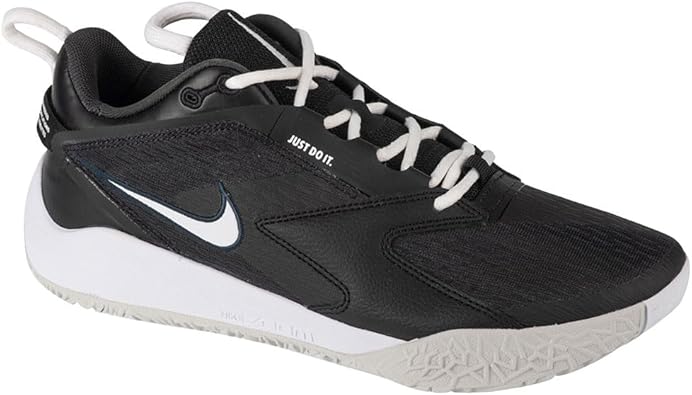
Nike Zoom Hyper
ace 3
Speed-focused design with firm responsiveness and strong traction for quick approaches and transitions.

What’s New in 2026
There haven’t been significant movements in volleyball shoe technology in the past few years, but there’s a growing trend of high top volleyball shoes.
Although you’ll still find low top models, most volleyball shoes nowadays are high top to protect the ankles as best as possible.
Different manufacturers use different types of gels or foams to pad the midsole as much as possible, cushioning the landing and making jumping a whole lot easier.
ASICS, for example, uses Flyte Foam, and an entire line of ASICS shoes is based on that technology.
The biggest advancements in volleyball sneakers technology relate to the production, rather than the design.
Manufacturers nowadays are trying to use as many recycled materials as possible to minimize their impact on the environment without sacrificing the quality of the shoe. Most reputable shoe manufacturers are big on recycling!

1. Best Overall Women’s Volleyball Shoe for 2026
If you’re building a “best overall” pick for women hitters, the Sky Elite line makes sense because it’s engineered around what volleyball punishes most: repeated landings, hard braking on approaches, and quick re-acceleration after contact.
The newer Sky Elite generation is known for pairing impact management with that springy, upward transition you want on an approach, instead of feeling like a soft training shoe that just absorbs everything and gives nothing back.
Mid Top 3 = more structure and security. If you like a “held” feeling around the ankle and heel during block landings or when you come down off-balance, the mid-top collar and added upper structure are what I would suggest.
It’s the better option if you’ve had ankle scares, you play in messy landing zones, or you simply trust your jump more when the shoe feels locked in.
Sky Elite 3 (low) = freer movement and less bulk. You still get the same performance DNA, but with a lighter, less restrictive feel around the ankle.
I would suggest this for hitters who rely on fast transitions (especially outsides who pass, then sprint into approach), that slightly freer cut can feel smoother over long matches because it’s less “boot-like.”
Materials-wise, both versions tend to lean on a breathable engineered upper for comfort, plus a supportive heel/lockdown setup to stop sliding on hard takeoffs.
Underfoot, this line’s identity is the cushioning + stability/propulsion combo (RISETRUSS is the big one people mention), which is exactly why it fits the “best overall” slot. It’s not just soft and bouncy, it’s built to stay consistent when your legs are tired.
In-game, you feel it most in two moments. This includes during the approach-to-jump transition, when the shoe will let you keep your approach efficient instead of wasting energy in a mushy midsole.
Also, during late-match landings, when your form starts to get sloppy, a stable platform and a good lockdown matter more than raw bounce.
Quick “Mid vs Low” comparison: Mid Top 3 if you want extra ankle structure; Sky Elite 3 if you want the same performance with a cleaner, lighter feel.
Recommended Use
Best for competitive women hitters (outsides, opposites, and middles) who want a true “do-it-all” volleyball shoe with strong impact management and stable approach mechanics.
The Good
Elite all-around performance for hitters (jumping, landing, grip, stability).
Mid vs Low gives you a clear choice based on support preference.
Built for volleyball movement patterns, not generic court use.
The Bad
Premium pricing compared to entry-level and mid-tier options
Mid-top can feel “too structured” if you prefer free ankle mobility

2.Mizuno Wave Momentum Women’s Volleyball Shoes
Although they can’t knock the FlyteFoams off their throne, Mizuno Wave Momentum shoes are another great option.
The original Wave Momentum is fairly bouncy but has really incredible shock absorption which makes it perfect for any volleyballers doing a ton of jumping.
The Mizuno Wave Momentum 2 is way more bouncy, but with significantly less impact protection, making it more fun to jump in, but less effective at protecting your joints.
I always recommend going for the original Momentums but both shoes are excellent in their own ways.
The shoe is also ultra lightweight and responsive with incredible traction, making it perfect for all positions.
For liberos and setters I’d recommend going for the Momentum 2s and for outsides, opposites, and middles, I’d stick with the original Momentums.
Ideal For
- Athletes who prefer lightweight shoes. I believe this is the lightest volleyball shoe on the market!

3. Best Speed-Focused Volleyball Shoe for Women
The reason I put the ASICS Netburner Ballistic FF 4 on this list is that it serves a very specific type of volleyball athlete. This is for players who want speed, precision, and control first, and cushioning second.
While it doesn’t market itself as a “big jump” shoe, that’s exactly why it works so well for many women hitters who rely on timing, sharp movement, and consistency rather than raw vertical power.
At its core, the Netburner Ballistic FF 4 feels lower and more grounded than jump-centric models like the Sky Elite, due to its lower court profile, which gives you a clearer sense of where your foot is at all times.
This pays off during fast approaches, quick recoveries after landing, and tight lateral movements near the net. You feel connected to the floor instead of floating above it, and that control builds confidence over long rallies.
What I love about this shoe is that the midsole uses ASICS’ FlyteFoam-based setup, which prioritizes responsiveness over softness.
The landings feel very firm, yet controlled, and you’ll rarely feel like the shoe’s collapsing under pressure.
I suggest it for hitters who don’t love overly plush cushioning or feel delayed by softer setups. This is because this responsiveness can actually make footwork cleaner and more predictable.
Another winner for me would be its stability. The Ballistic FF line has always leaned into midfoot support and anti-twist elements, and that shows here. During side-to-side movement along the net, the shoe stays composed instead of rolling or flexing awkwardly or dangerously.
This makes it especially appealing for hitters who play fast offenses, chase tight sets, or need to close blocks quickly without feeling unstable.
Plus, the upper strikes a nice balance between structure and breathability. So, you feel overly stiff, but it also doesn’t stretch out and lose shape after a few break-ins.
But that doesn’t affect the lockdown, which stays secure enough to trust during aggressive approaches, while the heat management is perfect for longer practices or tournament days.
My observations on where the Netburner Ballistic FF 4 falls short for some players is its pure impact protection. If you’re a very high-volume jumper or someone with sensitive knees, you may eventually want more cushioning underfoot.
However, for an athlete who prioritizes speed, control, and clean movement mechanics, that trade-off often feels super worth it.
Think of this as a “movement-first” hitter shoe, not a bounce-first one.
Recommended Use
Best for women hitters who value speed, court feel, and lateral control, especially those playing faster systems or relying on precise footwork.
The Good
Low, responsive feel improves court awareness and movement precision
Strong lateral stability for net play and defensive transitions
Lightweight, controlled ride that doesn’t feel sluggish
Secure upper with good breathability for extended sessions
The Bad
Less cushioning than jump-focused volleyball shoes

4. Premium Performance Volleyball Shoe for Women
Although a cross-over from handball shoes, I must include the ASICS Blast FlyteFoam 3 to the list as it translates extremely well to women’s volleyball.
This is a shoe that feels solid, intentional, and unapologetically performance-driven from the first step, a perfect choice for hitters who value protection and structure.
What immediately stood out to me was the shoe’s midsole setup. Compared to the lighter and more speed-oriented models, the ASICS uses a more substantial FlyteFoam construction that you feel the difference in right away.
All your landings will be dampened and protected with control, but not in a soft or mushy way, perfect for those who jump frequently or land hard.
So, during long practices or tournament weekends, this level of cushioning can make a meaningful difference in how your legs feel by the end of the day. But, in no way does that added protection make the shoe feel sloppy or unstable.
What I love about the platform is that it is wide and trustworthy, which helps during off-balance landings, late block closes, or chaotic net play.
So, instead of compressing unevenly, the midsole holds its shape, keeping your foot aligned and reducing that “wobble” sensation that can stress ankles and knees over time.
For me, stability is a major reason this shoe earns a premium spot. The Blast FlyteFoam 3 feels planted during lateral movement, whether you’re shuffling along the net, transitioning from defense to approach, or adjusting mid-rally.
But note that it’s not built to feel razor-sharp or twitchy. Instead, it prioritizes control, which many hitters actually prefer once matches get intense and fatigue sets in.
The upper leans more supportive than flexible. It wraps the foot securely and maintains structure even after repeated hard movements.
I feel that these shoes are very dependable, especially for players who dislike uppers that stretch out or lose lockdown after a few sessions. Plus, although it’s not the best in its class, its breathability is quite good.
Now, where some players may hesitate is weight and feel. Compared to lighter models, this shoe is better suited for hitters who prioritize durability and impact management rather than pure speed or minimal court feel.
A strong option if you want a premium, protective feel without sacrificing stability.
Recommended Use
Best for women hitters who want extra cushioning, stability, and structure, particularly those with higher jump volume or who play physically demanding matches.
The Good
Excellent impact protection for repeated landings
Wide, stable base improves confidence near the net
Supportive upper maintains structure over time
Consistent, controlled feel during lateral movement
The Bad
Heavier than speed-focused volleyball shoes
Not as breathable as lighter, mesh-heavy options
5. Best Speed-Focused Volleyball Shoe for Women
The Nike Zoom Hyperace 3 sits in a very specific and valuable space for women hitters. What I would emphasize is that this shoe’s objective is not to be the most cushioned or protective shoe.
Rather, the shoe design is for players who want to be able to react quickly and make sharp movements while remaining grounded. For many hitters, especially outsides and fast-paced opposites, that trade-off makes a lot of sense.
From the first wear, the Hyperace 3 feels light and nimble. Nike keeps the platform relatively low, which helps you stay close to the court during defensive movements and approach footwork.
That low-to-ground feel makes timing easier to dial in, particularly if you rely on speed rather than raw power to beat the block. Plus, movements feel immediate and not delayed by excess cushioning or bulky materials.
The cushioning setup is firm and responsive, so you won’t find yourself sinking into the midsole when you land. Instead, the shoe absorbs just enough impact to stay comfortable while returning energy quickly for the next sharp movement.
For hitters who take a lot of short, fast jumps and don’t depend on huge max-effort swings, the shoe is the most efficient choice over a full match.
I believe that traction is one of the Hyperace 3’s biggest strengths. The outsole has an aggressive grip on clean indoor courts, so you always feel confidence during approach steps, lateral slides, and quick defensive reactions.
Cuts feel super controlled, and there’s very little feedback when suddenly changing direction. This makes the shoe particularly effective for players who are constantly moving between front-row attacking and back-row defense.
Best of all, the upper is also streamlined and secure. Although the fit is quite snug and firm, it helps you have better control during fast movements.
Sadly, players with wider feet may feel some pressure, especially during longer sessions when feet naturally swell. But that also means lockdown is excellent and once you’re laced up, your foot stays centered, reducing internal movement during explosive plays.
So, the Hyperace 3 may not suit everyone, but it does provide long-term impact protection. But, compared to more protective models, repeated heavy landings can feel harsher, especially for players with knee sensitivity.
Best for hitters who rely on speed, timing, and sharp transitions rather than maximum cushioning.
Recommended Use
Ideal for outside hitters and fast opposites who prioritize agility, quick approaches, and strong traction over plush impact protection.
The Good
Excellent traction on clean indoor courts
Lightweight, responsive feel supports fast play
Low profile improves court awareness and timing
Secure lockdown during aggressive movement
The Bad
Firm cushioning may feel harsh for heavy jumpers
Snug fit, especially for wider feet

6. Best Budget-Friendly Volleyball Shoe for Women
The sport is always welcoming newcomers, and to be honest, not every volleyball player needs those heavy, high-tech, premium shoes to stand out. And so my pick for the best budget-friendly volleyball shoe should be the Mizuno Women’s Cyclone Speed 3.
So, if you’re new to the game and want a good training shoe, you can consider this one, as it’s light and reliable. It’s also a perfect pick if you play recreationally and don’t want to really invest in a more premium wear.
From the moment you put it on, the Cyclone Speed 3 feels easy. It’s noticeably lightweight, which immediately reduces leg fatigue during long practices or multi-set matches.
That lightness also makes movement feel natural, especially during approach footwork, defensive shuffles, and quick transitions from back row to front row. Nothing about this shoe feels overbuilt or restrictive.
I would say that the cushioning is a bit basic, but still highly reliable. You won’t get the plush impact absorption of premium models, but you also won’t feel unstable or uneven when landing.
For players with moderate jump volume, the midsole does enough to stay comfortable without adding unnecessary bulk. This makes it especially suitable for developing hitters who are still refining technique and timing rather than chasing maximum jump height.
Where the Cyclone Speed 3 really shines is in flexibility. The outsole bends naturally with the foot, allowing smooth toe-off during approaches and quick reactions on defense.
This helps newer players feel more grounded to the floor, meaning they experience better balance and movement awareness, essential to learning the craft. As its traction is solid on indoor courts, you’ll have a reliable grip for easy training.
The upper is made to be breathable and comfortable with a lightweight mesh construction that manages heat well during long sessions. I would advise not to expect the same level of structure as more expensive shoes
The fit holds the foot tight and is generally forgiving and true to size. This removes much of the guesswork when ordering online and helps you wear exactly what you need for a secure and controlled play.
I believe that durability is reasonable for the price. Although this shoe isn’t designed to absorb years of elite-level punishment, it’s perfect for regular training, school volleyball, club-level play, or as a secondary practice shoe.
This shoe’s trade-offs are super clear, as it’s clear who this shoe is not for. High-volume jumpers or players with knee sensitivity will outgrow this shoe quickly. And hitters who rely heavily on power may want more structure and protection.
The Cyclone Speed 3 succeeds because it stays honest, and doesn’t place itself as something it’s not. And for the right player, the simplicity is what keeps it affordable and perfect for starting their journey into volleyball.
A great option if you want a lightweight, affordable shoe that stays comfortable during long practices.
Recommended Use
Best for beginners, budget-conscious players, or women looking for a lightweight training shoe with reliable comfort and traction.
The Good
Very lightweight and easy to move in
Flexible outsole supports natural foot motion
Breathable upper for long sessions
Excellent value for the price
The Bad
Limited impact protection for frequent jumpers
Not built for high-intensity, elite-level play

7. Best Basketball-to-Volleyball Crossover Shoe for Women
The Nike Sabrina 2 is another basketball shoe that earns its place in a women’s volleyball list not because of marketing or my personal preference, but because of how well it handles the actual demands of volleyball movement.
For hitters who value stability, control, and efficient movement over plush cushioning, this shoe makes a lot of sense.
For me, what stands out immediately is how grounded the Sabrina 2 feels. The platform sits low to the floor, which creates excellent court awareness during approaches, defensive positioning, and lateral movement.
This low setup helps with balance and timing as it’s closer to the ground. So, if you’re a hitter who relies on precise footwork instead of those vertical explosions, you should consider the Sabrina 2.
What I like about the cushioning is that it’s firm and responsive. So, instead of compressing deeply on landings, the midsole absorbs impact in a controlled way, so you can return with energy quickly.
That makes repeated jumps feel efficient rather than draining. So yes, while it doesn’t provide the soft landing feel of premium volleyball-specific models, it keeps you stable and connected, which many hitters prefer once rallies speed up.
For me, what makes the Sabrina 2’s stand out from the rest is its strengths. It has a wide base and strong midfoot structure, which prevents excessive roll during awkward landings or aggressive lateral cuts.
This is especially valuable for women who attack out of system, land in traffic near the net, or transition quickly between front-row and back-row play. The shoe feels composed even when your movement isn’t perfect.
The upper provides excellent containment, and once you’re laced up, your foot feels locked in without pressure points, reducing internal movement during explosive plays. This secure fit will help you stay more confident during hard approaches and sudden defensive reactions.
It is a unisex model, so do remember to take time to research and invest proper attention when sizing up. But, once you find your fit, you’ll find it to be consistent and supportive throughout its journey.
Its traction performs best on clean indoor courts, where the outsole grips confidently during approach steps, slides, and stops. Direction changes feel predictable, not jerky, which helps maintain rhythm during fast rallies.
I’ve noticed that the shoe remains agile late into matches, partly thanks to its relatively lightweight construction for a stability-focused model.
Where some players may hesitate is impact protection. Compared to heavily cushioned volleyball shoes, when you land with the Sabrina 2, you feel firmer. But players with knee sensitivity or extremely high jump volume will have to choose a more protective option.
A strong choice if you prefer a low, stable, and responsive feel over plush cushioning.
Recommended Use
Ideal for women hitters who want excellent stability, court feel, and control, especially those comfortable wearing basketball shoes for volleyball.
The Good
Very stable, low-to-ground platform
Responsive cushioning supports efficient movement
Secure containment during aggressive play
Excellent crossover option from basketball to volleyball
The Bad
Firmer landings than volleyball-specific shoes
Best traction on clean, well-maintained courts
How to Choose the Right Volleyball Shoes
I want you to keep these things in mind when buying your volleyball shoes: the level you’re playing at, the position you’re playing, and the type of fit you want.
The level you’re playing at is arguably the most important thing to keep in mind because if you’re playing the game at a low level, there’s no need to invest in professional volleyball shoes. It certainly won’t hurt, but there are cheaper options that will work just fine if you’re only wearing them once or twice a week.
If you’re playing at a higher level, though, budget volleyball shoes for women simply won’t do – you’re going to need good shoes appropriate for your position.
This is where the second part of the choosing process starts – determining shoe type based on your position. Liberos, for example, don’t do as much jumping as hitters, which is why their shoes need less cushioning. Before anyone gets offended – I’m not saying liberos don’t jump at all, but the chances of twisting your ankle or simply landing awkwardly and hurting your foot are significantly higher if you’re a hitter.
Because of this, liberos and setters don’t need the same level of cushioning in their shoes.
Remember this when choosing your shoes; hitters need more ankle protection and cushioning than liberos and middles, while liberos and middles need more traction than hitters. Setters need a good combination of all three things.
When it comes to the type of fit you want, remember that some shoes are a better fit for narrow-footed people, while other shoes cater to wide-footed players. I’ll mention this specifically for each model when I start listing them down, as it’s one of the most common problems with finding the proper fit.
Some volleyball shoe manufacturers have sizing guidelines on their respective websites, so you can check them out as they tell you exactly how to measure your foot to make sure you choose the right size!
The Difference Between Men’s and Women’s Volleyball Shoes
The most obvious differences, that hardly need mentioning, are size and color. Men’s shoes come in larger sizes because men have larger feet on average, while men’s shoes also rarely come in pink and other colors stereotypically considered feminine (which I find needlessly limiting).
The differences in shape, however, are noticeable.
Women’s shoes are usually more narrow at the heel because of the natural differences between men’s and women’s feet, with women usually having more narrow feet.
The front part of the shoe, known as the ball of the foot, is proportionally wider than the back part of the shoe, just like with men’s shoes, but it offers more free room to women than to men because women have naturally narrower feet. As a woman, you’re less likely to come across the wide-foot problem.
Then, there’s the durability debate. Some athletes believe men’s shoes are more durable because they’re built for durability. On one hand, men are heavier, men’s shoes need to carry more weight and take more punches (not in the literal sense of the word), so they’re built to be more durable and last longer.
On the other hand, women are almost always lighter than men, and they apply less force to their shoes, so the shoes have less resistance and they’re less likely to succumb to wear and tear.I’m a believer in the second theory – top rated women’s volleyball shoes will outlast top rated men’s volleyball shoes simply because women don’t apply as much force to them. Cheap women’s volleyball shoes won’t outlast anything.
Frequently Answer Question
What are court shoes for volleyball?
Volleyball court shoes are different from shoes for other sports. They’re built for jumping and safe landing, while the glue on the soles provides plenty of traction for the player.
What are the best volleyball shoes for women?
ASICS’s Sky Elite FlyteFoam are, right now, the best volleyball shoes for women. They’re the pinnacle of volleyball shoe design with their supreme bounce, cushioning, traction and foot security.
How do I measure my foot for volleyball shoes?
Most volleyball shoe manufacturers have a sizing guide on their official websites. Different manufacturers measure their sizes differently!
