
So you may have figured it out already. The reason your game skills aren’t improving is your poor serving. And as much as that frustrates you, there is only one way to fix it. Learn, practice, and master the art.
You can curve a volleyball serve by hitting it with spin. Apply the side spin when hitting it so it changes its direction mid-air. That will make it unpredictable for your opponent’s team.
You can practice curving by learning an underhand serve, a float serve, a jump serve, and a topspin serve. Each has its own merits and can upgrade your skills remarkably. In this article, I will tell you about each serve, how to practice them, and what they add to your game. Keep reading!
The Underhand Serve – Basic but Beneficial
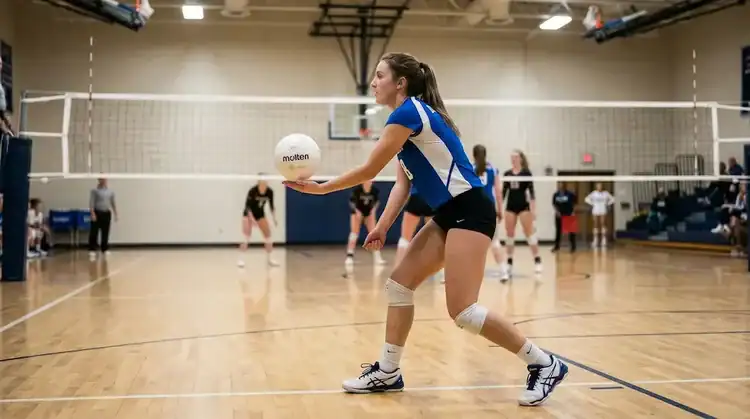
The main thing about this serve is that you have to use your preferred hand when striking the volleyball. When doing so, keep your weaker foot forward. If you are right-handed, use your right hand to strike the ball and your left foot to stay forward.
This basic serve helps you gain control and consistency. You learn to maintain both instead of just working on speed or power. Here’s what you need to know:
Position
Take your standing behind the service line. Your feet should be shoulder-width apart. Put your weaker foot a little ahead to gain balance.
Grip
Now, hold the volleyball at your waist level. Use both hands and place the ball in front of you.
Serve
Draw back your hitting arm (mind you, it’s the dominant one) before swinging it forward. Then put your palm beneath the ball to create a seamless upward motion.
Remember that, during this time, your wrist should stay firm during impact. It might be slightly bent but not rigid. That way, you can drive harder into the ball’s base. That, in turn, will lead to a curving effect.
Now, how do you practice it? Here’s the drill!
The Float Serve – The Trick with a Twist
Understanding this move will leave your opponents bamboozled, giving you an edge from the beginning of the match. Now, mastering a move like this makes you earn it. Here’s the drill for that.
Position
It’s the same as the one above. Your body and face should face the place where you want to serve directly.
Grip
Use your secondary or shelf hand to hold the volleyball.
Toss
Now, use the same hand to toss the ball above your head, from 1 to 1.5 feet up. Here are some things to remember during this time.
- Your arm should be fully extended or the ball should be near your eye level when released.
- You must throw your volleyball straight up. Otherwise, the hit might lose balance.
- Let me remind you that the ball should be lifted, not thrown, in a manner of pushing.
- As you get prepared to hit the ball, draw back your hitting elbow just a little above your ear.
- Now swing forward and hit the ball when it reaches its peak. Strengthen your hit by applying your torso and arm’s torso.
Hit
Extend your hand to hit the ball using your palm. Punch it the moment you stop the swing after reaching the ball. I’d emphasize the timing for the perfect output.
- Now, remember that you will get almost no follow-through after hitting it. It’s not like the underhand serve.
- So, that means you have to push forward with no spin (okay, maybe a little but that’s it) because that’s how you pull off a floating serve.
The Topspin Serve – Prowess for Power
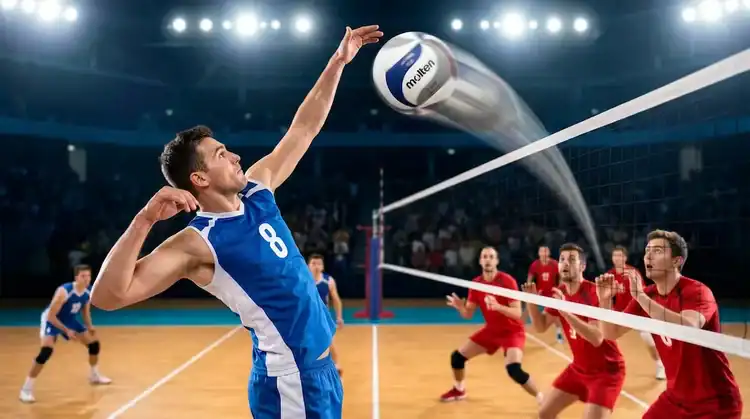
This serve is amazing for creating an elusive curve. It causes the ball to drop quickly after it crosses the net. And then, it adds side spin, giving it an unpredictable curve effect.
So, how does it work?
To learn this serve, you have to strike your volleyball in an upward motion. Your wrist should stay slightly bent now.
You’ll know you have done it right when you see the wonderful topspin on the ball. Below, I’m giving you more directions to understand it better.
Aim
Keep your aim high over the net. It will make more room for the topspin to create a downward trajectory.
Contact in Sync
During the serving action, your main foot that is stepping forward and your hitting shoulder must be in sync. Well, that makes it kind of strict. But trust me, it is crucial to secure power and balance when you make each shot.
The Jump Serve – The Secret Sauce
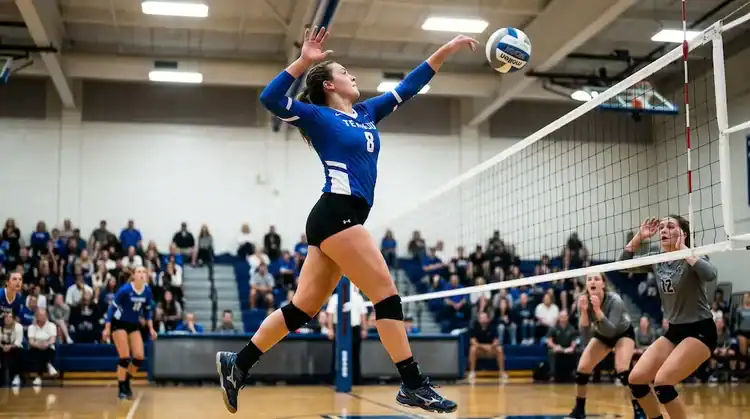
I call this serve secret sauce because you can use it as a secret weapon and take control of the match.
The serve requires changing the curve of the ball. As a result, it makes it more challenging for the opposing players to receive the serve.
Most of the drill is similar to the other serves. So I am not going into the details. For example, when you put yourself a bit far from the line, take the same position as the underhand serve.
Now, you are to take two steps forward and toss the ball in the same way you would for the float serve.
Easy, right? Here’s the not-so-easy part.
Jump
Make a powerful jump and bring back your arm simultaneously. Give it all your strength to create momentum for your hit.
Hit
Flick your wrist when hitting your volleyball downwards. You will get a good deal of follow-through for the jump.
You may still find it easy. But I’d never encourage you to try if you haven’t mastered the other three. Otherwise, you may end up getting yourself hurt.
Closing Thoughts
Curving a volleyball serve isn’t a piece of cake, I’ll give you that. But I’ll also have you know regular practice can make it highly achievable. Once you learn the art of it and see its impact on your game, you’ll definitely appreciate it.
