
You’ve seen them on the court. Half the players in your gym are in basketball shoes now, and nobody thinks twice about it any more.
So the real question isn’t whether you can. It’s which ones.
There’s a ridiculously large range of basketball shoes on the market right now, and most of them are genuinely wrong for volleyball… Some are too heavy. Some sit too high off the floor. Some have traction that feels incredible on a clean court and disappears once the dust builds up in set four.
But yes, you can wear basketball shoes for volleyball, and plenty of them outperform actual volleyball shoes for certain roles on court.
I’ve played in basketball shoes on the volleyball court for years, so I know the difference between a pair that survives a full season and a pair you regret halfway through it.
Here’s how I picked these ten. Every shoe below has an independently measured weight, stack height, heel-to-toe drop and traction score behind it, taken from lab testing rather than brand marketing. Then I matched those numbers against what each position on the court actually asks of a shoe, because a libero and a middle blocker need close to opposite things.
Let’s begin!
Best Overall
.

Nike LeBron 21
The most stable base of any shoe on this list, with traction that holds up once the court gets dusty.
Best For Outside Hitters & Opposites
.

Nike LeBron 22
The highest traction score of any shoe here, built for players who land hard and land often.
Best For Middle Blockers
.

Nike KD 17
Low enough to move along the net, cushioned enough to survive a full block-jump workload.
Best For Setters & Liberos
.

Nike Ja 2 Nightmare
The lightest shoe on this list and the closest to the floor, made for players who never stop moving.
Best Traction
.

adidas D.O.N. Issue 7
Lab-measured grip second only to the LeBron 22, at less than half the price.
Best For Women
.

Nike Sabrina 2
Genuine women’s sizing from a 5, and the most court feel of anything here.
Best Value
.
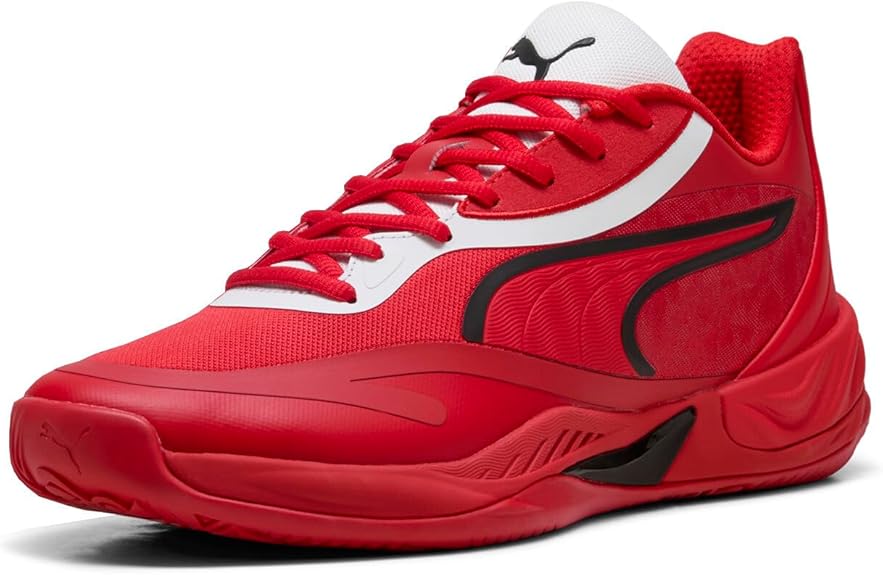
PUMA All-Pro Nitro Skybreak
Top-tier traction and support scores for around forty dollars.
Best For Wide Feet
.

Nike Giannis Immortality 3
The widest toe box measured here, on one of the two lightest shoes in the lineup.
Best Budget
.

Nike LeBron Witness VIII
More heel cushioning than shoes costing three times the price.
Best Dual-Sport
.

LI-NING Wade All City Series
The one pair here built to survive an outdoor court as well as an indoor one.
I suggest all the product descriptions of each shoe below and picking which will be best suits for your.
So without further ado, let’s begin!
 Nike LeBron 21
 0.88 friction, 5/5 torsional rigidity and a 5/5 heel counter, with separate Zoom Air and Zoom Turbo units under the heel and forefoot. At 14.2 oz it is not light, but nothing here protects a landing better.
Best Overall: Nike LeBron 21
The Nike LeBron 21 is the shoe I’d hand to a player who wanted one pair that does everything well.
It weighs 14.2 oz, which is not light. But the numbers underneath that weight are what put it at the top of this list. In RunRepeat’s lab testing it scored 5 out of 5 for both torsional rigidity and heel counter stiffness, and it’s the only shoe in this lineup to take full marks on both.
That matters more in volleyball than people realise. Torsional rigidity is what stops your foot twisting when you plant and change direction, and a stiff heel counter is what keeps your heel locked down through an approach.
Traction measured at 0.88, second only to the LeBron 22 here. On a clean wooden floor that’s excellent, and it holds up better than most once the dust starts building in the back half of a match.
The stack sits at 26.6mm under the heel and 22.4mm at the forefoot, which works out to a 4.2mm drop. That’s flatter than almost everything else on this list, so despite all the cushioning you stay reasonably level and keep a decent amount of court feel.
The midsole is Cushlon with a Zoom Air unit in the heel and Zoom Turbo in the forefoot, so your landings and your take-offs are handled by separate pieces of tech rather than one foam trying to do both jobs.
At 75.7mm across the big toe it’s also one of the roomier shoes here, which makes it worth a look if you have wide feet.
Recommended Use
I’d recommend the LeBron 21 for outside hitters, opposites and middle blockers who want one shoe that does everything competently rather than one that’s brilliant at a single thing.
The Good
Traction measured at 0.88, the second highest score in this lineup.
A 4.2mm drop keeps you level and low despite the cushioning underneath.
Separate Zoom Air and Zoom Turbo units handle landings and take-offs independently.
A 75.7mm toe box, roomy enough for most wide-footed players.
The Bad
At 14.2 oz it’s heavier than six of the ten shoes here, and backcourt players will feel it.
The 26.6mm heel stack isn’t the deepest cushioning here, so you’re paying for stability and grip rather than plushness.
 Nike LeBron 22
 0.95 friction is the highest traction figure measured anywhere in this test group. The trade-off is 15.6 oz, the heaviest shoe here, so it only makes sense if you spend the match jumping and landing.
Best For Outside Hitters & Opposites: Nike LeBron 22
If the LeBron 21 is the sensible pick, the LeBron 22 is the one you buy when you jump a lot and you land hard.
It measured 0.95 for traction. That’s the highest figure of any shoe on this list, and the highest I came across anywhere while researching this article. What it means on court is that the shoe stops when you tell it to, whether you’re closing on a block or shutting down a hard lateral cut in defence.
The midsole is Cushlon 2.0 with a Zoom Air unit under the heel and Zoom Turbo in the forefoot. The heel stack measures 27.1mm, slightly deeper than the LeBron 21. For outside hitters and opposites taking forty-odd approach landings in a match, that extra foam under the heel adds up across a season.
Now the honest part. This shoe weighs 15.6 oz, and that is genuinely heavy… It’s the heaviest pair here by more than a full ounce, and there’s a reasonable argument that anything over 15 oz is too much shoe for volleyball.
I’d still take it for a front court player, because the trade is a real one. You’re buying grip and landing protection, and you’re paying for it in weight. If you play in the back court, or you’re on court all day at a tournament, the lighter picks further down this list will treat you better.
One useful quirk worth knowing: the sizing runs down to a men’s 3.5, which converts to a women’s 5. Very few basketball shoes go anywhere near that small.
Recommended Use
I’d recommend the LeBron 22 for outside hitters, opposites and middle blockers who take a high volume of hard approach landings and want the most traction and impact protection they can get.
The Good
Traction measured at 0.95, the highest score of any shoe here.
A 27.1mm heel stack, deeper than the LeBron 21 for the same job.
Cushlon 2.0 paired with Zoom Air in the heel and Zoom Turbo in the forefoot.
You can choose from over 20 different color schemes.
The Bad
At 15.6 oz it’s the heaviest shoe on this list, and it’s the wrong choice for liberos and setters.
The 67.2mm toe box is one of the narrowest here, so wide-footed players should look elsewhere.
 Nike KD 17
 13.8 oz on a 26.1 mm heel with a 23.1 HA midsole, so it stays firm enough to read the floor while still absorbing repeated blocking landings. The 65.3 mm toebox is the narrowest measured here.
Best For Middle Blockers: Nike KD 17
Middle blockers have the strangest job on a volleyball court. You jump more than anyone else in the building, sometimes on every single rally, and in between those jumps you’re sprinting sideways along the net.
That combination rules out most of the heavy max-cushion shoes. It also rules out anything too thin to survive the jump volume.
The Nike KD 17 lands in between, and that’s exactly why it’s here. At 13.8 oz it sits mid-pack on this list, lighter than either LeBron and heavier than any of the backcourt picks.
It’s a low-top build with a 26.1mm heel stack and 20.5mm at the forefoot, so you’re not perched up high when you’re shuffling across to close a block.
Underneath there’s an Air Strobel unit in the heel and Zoom Air in the forefoot. The outsole rubber measured 87.1 HC, which is on the harder end of the scale, laid out in a wavy tread pattern with thick, sturdy treadlines. Harder rubber tends to wear more slowly, and that matters if you’re on court four or five days a week.
Traction came in at 0.74, and that’s the one number I’d want you to know before you buy this shoe. It’s perfectly fine on a clean court. It is not in the same league as the LeBron 22 or the D.O.N. Issue 7 once the floor gets dusty, so if you play somewhere the courts don’t get swept between sessions, factor that in.
Recommended Use
I’d recommend the KD 17 for middle blockers, and for any front court player who wants something noticeably lighter than the LeBrons without dropping down to a backcourt shoe.
The Good
At 13.8 oz it’s light enough to move along the net and substantial enough for a full block-jump workload.
A low-top build with a 26.1mm heel stack keeps you close to the floor.
Air Strobel under the heel and Zoom Air in the forefoot, so each job gets its own piece of tech.
An 87.1 HC outsole compound, one of the harder ones here, which should wear slowly.
The Bad
Traction measured 0.74, one of the lower scores on this list, and it drops off on a dusty floor.
The 65.3mm toe box is the narrowest of any shoe here, so wide-footed players will struggle.
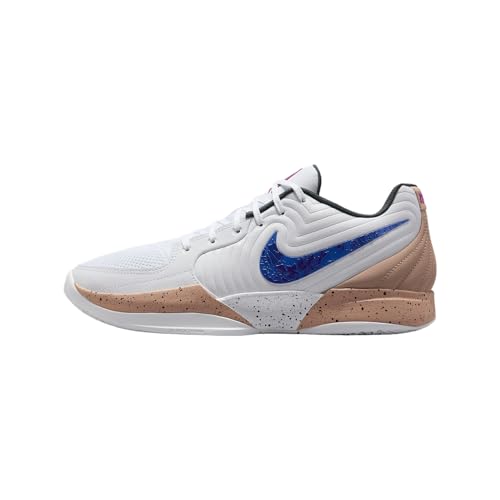 Nike Ja 2 Nightmare
 11.9 oz with a 3.9 mm drop, the flattest and joint lightest shoe on this list. Built for players who change direction far more often than they land from a block.
Best For Setters & Liberos: Nike Ja 2 Nightmare
Setters and liberos are playing a different sport to the middles, in shoe terms at least.
You’re not landing from big approach jumps forty times a match. You’re changing direction constantly, staying low, and covering ground. What you want is weight off your feet and a shoe that lets you feel the floor underneath you.
The Nike Ja 2 Nightmare is the best answer on this list for both.
It weighs 11.9 oz, which ties it for the lightest shoe here. More importantly it has a 3.9mm heel-to-toe drop, the flattest figure of anything I looked at for this article. Paired with a 26.1mm heel stack, you sit low and level, which is exactly what you want when you’re dropping into a dig or resetting for the next ball.
The rough guidance for backcourt players is to stay under 12 oz and under 30mm at the heel. This shoe clears both without breaking a sweat.
Cushioning comes from an Air Zoom unit in the midsole, and it still scored 4 out of 5 for both torsional rigidity and heel counter stiffness. That combination is genuinely uncommon at this weight. Most brands give up structure to hit a low number on the scales.
One note on the Nike Ja 3, because it comes up a lot… It exists, it’s newer, and it costs more. I’ve stayed with the Ja 2 here because it has a far bigger review base to judge from and it’s the better value of the two right now. If that changes, I’ll update this.
Recommended Use
I’d recommend the Ja 2 Nightmare for setters, liberos and defensive specialists who want the lightest, lowest shoe they can get without giving up structure.
The Good
At 11.9 oz it’s tied for the lightest shoe on this list.
A 3.9mm drop, the flattest here, so you sit as close to the floor as this list gets.
The 26.1mm heel stack sits comfortably under the 30mm mark that suits backcourt play.
You can choose from over 20 different color schemes.
The Bad
Traction measured 0.77, which is only mid-table, and quick stops are exactly what this position lives on.
 adidas D.O.N. Issue 7
 0.87 friction from a Lightstrike Pro forefoot, and only 1.1 mm of heel wear after durability testing. Just know it is 14.0 oz with a 9.0 mm drop, so it is not the low-top agility shoe the name suggests.
Best Traction: adidas D.O.N. Issue 7
This is the section for anyone who plays on a court that doesn’t get swept.
Traction is the thing basketball shoes most often get wrong for volleyball. A rubber compound that grips beautifully on a freshly cleaned floor can turn into an ice rink by the third set, and you tend to find out at exactly the wrong moment.
The adidas D.O.N. Issue 7 measured 0.87 for traction. That puts it second on this entire list, behind only the LeBron 22, and it costs roughly a third as much.
The outsole is split into two compounds. Regular rubber under the heel in a linear pattern, translucent rubber up front in a circular tread. A circular pattern has no grain direction to it, which is part of why the grip holds regardless of which way you’re moving.
Durability testing backs that up. After abrasion the shoe had lost 1.1mm of rubber from the heel and just 0.9mm from the forefoot. That’s a shoe built to survive an outdoor court, never mind an indoor one.
The midsole is full-length Lightstrike with a slab of Lightstrike Pro under the forefoot. The heel sits at 28.4mm, one of the deeper heels here.
The forefoot, though, is only 19.4mm, and that gap between the two is what gives you a 9.0mm drop. That’s one of the two steepest drops on this list. It’s a well-cushioned shoe at the back and a fairly firm one at the front, so don’t buy it expecting the low, flat feel of the Ja 2.
One last thing worth knowing. This is one of only three shoes here sold in genuine dual sizing, running from a women’s 5 through to a men’s 11.5, with wide fittings across the whole range.
Recommended Use
I’d recommend the D.O.N. Issue 7 for anyone playing on courts that get dusty, and for front court players who want close to LeBron-level grip without the LeBron price.
The Good
Traction measured 0.87, second only to the LeBron 22 and at roughly a third of the cost.
Lost only 0.9mm of forefoot rubber under abrasion testing, so the outsole should last.
Full-length Lightstrike with Lightstrike Pro under the forefoot.
A 28.4mm heel stack, one of the deeper heels on this list for landing protection.
The Bad
At 14.0 oz it’s heavier than five of the nine shoes here with published weights.
The 9.0mm drop is one of the two steepest here, so it’s the opposite of a low-profile shoe.
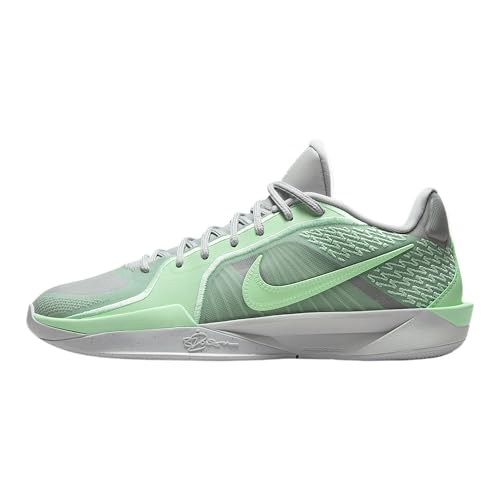 Nike Sabrina 2
 A 17.3 mm forefoot stack, the lowest measured in this group, which is exactly what a back row player wants for court feel. One of only three women's basketball shoes on Amazon with a real review base behind it.
Best For Women: Nike Sabrina 2
Let’s deal with the awkward truth first. Women’s basketball shoes barely exist.
Search for one and you’ll turn up three genuine options with a real review base behind them. Three. Everything else is either a men’s shoe in men’s sizing, or a fashion high-top pretending to be a performance shoe.
The Nike Sabrina 2 is the best of those three, and it’s the one I’d point most female players towards.
It’s Sabrina Ionescu’s signature shoe, and unlike most of this list it’s sold in proper dual sizing. A women’s 5 all the way through to a women’s 13.5, with a wide fitting in the middle of the range. No conversion maths required.
At 12.0 oz it’s among the three lightest shoes here. The forefoot stack measures just 17.3mm, the thinnest on this entire list, and that translates directly into court feel. If you play setter or libero, that low, connected sensation is exactly what you’re after. Cushioning comes from Cushlon foam paired with an Air Zoom unit.
Now the part I’d want you to weigh properly.
This shoe posted the lowest traction score on the list at 0.71, and the lowest torsional rigidity at 3 out of 5. The outsole rubber is soft, measuring 71.9 HC, laid out in zig-zag and linear tread lines.
Soft rubber and a flexible base are what give you feel. They don’t give you the locked-down grip of a LeBron 22 or a D.O.N. Issue 7.
So, honestly: if proper women’s sizing matters to you, buy the Sabrina 2 and enjoy how connected it feels. If you care more about grip and stability and you don’t mind working in men’s numbers, the D.O.N. Issue 7 is also sold in genuine dual sizing from a women’s 5, and it out-grips this shoe considerably.
And if you’d rather skip basketball shoes altogether, the best women’s volleyball shoes are a separate list.
Recommended Use
I’d recommend the Sabrina 2 for female setters and liberos who want proper women’s sizing and the most court feel available on this list.
The Good
Genuine dual sizing from a women’s 5 to a women’s 13.5, plus a wide fitting.
A 17.3mm forefoot stack, the thinnest here, for the most court feel on this list.
Cushlon foam paired with an Air Zoom unit in the midsole.
You can choose from over 20 different color schemes.
The Bad
Traction measured 0.71, the lowest score on this entire list.
The outsole rubber is soft at 71.9 HC, and softer compounds wear faster than the harder rubber on shoes like the KD 17.
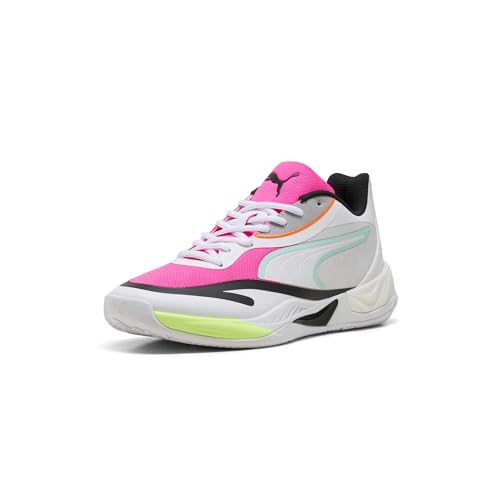 PUMA All-Pro Nitro Skybreak
 5/5 torsional rigidity, 5/5 heel counter and 0.88 friction, matching the LeBron 21 on all three for a lot less money. Heel shock absorption of 103 SA and 46.2% energy return back it up.
Best Value: PUMA All-Pro Nitro Skybreak
Every list like this has one shoe that makes the expensive picks look a bit silly. This is that shoe.
The PUMA All-Pro Nitro Skybreak measured 0.88 for traction. That is the identical figure to the Nike LeBron 21, the shoe sitting at the top of this list for around four times the money.
It also scored 5 out of 5 for torsional rigidity and 5 out of 5 for heel counter stiffness. The only other shoe here to take full marks on both is, again, the LeBron 21.
The heel stack measures 30.5mm, second only to the LeBron Witness VIII on this list. The Nitro midsole returned 46.2% of the energy put into it, with a heel shock absorption reading of 103 SA. In plain terms, it soaks up landings well and hands a reasonable amount back.
At 13.2 oz it sits mid-pack for weight. That’s fine for a front court player and a little much for a libero.
So what’s the catch?
Sizing, mostly. It’s sold in men’s numbers only, 7 through 14, which puts the floor at roughly a women’s 8.5. If your feet are smaller than that, this shoe simply isn’t available to you, and that’s a genuine shame because it would otherwise be the easiest recommendation on this page.
The 7.9mm drop also means it isn’t the low, flat shoe some players want. This is a cushioned, structured shoe that happens to cost very little, which is a different thing from a minimal one.
If you’re weighing up how much to spend on shoes in the first place, start here and see whether you actually need to spend more.
Recommended Use
I’d recommend the All-Pro Nitro Skybreak for front court players on a budget, and for anyone who wants LeBron-level lab numbers without the LeBron price tag.
The Good
Traction measured 0.88, identical to the LeBron 21 at a fraction of the cost.
A 30.5mm heel stack, the second deepest on this list.
103 SA heel shock absorption and 46.2% energy return from the Nitro midsole.
You can choose from over 20 different color schemes.
The Bad
Sold in men’s sizing only, 7 through 14, so nothing below a women’s 8.5.
The 68.7mm toe box is one of the narrower ones here.
 Nike Giannis Immortality 3
 76.0 mm across the big toe, the widest toebox measured in this group, at 11.9 oz. If most basketball shoes pinch through the forefoot, this is the one on this list actually built for your feet.
Best For Wide Feet: Nike Giannis Immortality 3
If you’ve ever bought a basketball shoe that felt like it was squeezing the front of your foot flat, this is your section.
The Nike Giannis Immortality 3 measured 76.0mm across the big toe. For context, the KD 17 further up this page came in at 65.3mm. That’s nearly eleven millimetres of difference, and it is not subtle when you put both on.
What makes it more interesting is that the width doesn’t come with a weight penalty. At 11.9 oz it ties the Ja 2 Nightmare as the lightest shoe on this entire list.
The forefoot stack measures 24.7mm, which is the thickest here. So you’re getting width, low weight and real cushioning under the ball of your foot all at once. That combination is rare. Most wide shoes are bulky, and most light shoes are thin up front.
Cushioning is Nike’s Renew foam, with a 29.7mm heel producing a 5.0mm drop. The outsole rubber measured 84.9 HC, towards the harder and more durable end of the range.
One thing to be straight about. Nobody has published an independent traction measurement for this shoe, so it’s the single pick on this list where I can’t tell you how the grip compares. Every other shoe here has a number behind it.
If your issue is arch height rather than width, flat feet is a separate conversation and a separate list.
Recommended Use
I’d recommend the Giannis Immortality 3 for wide-footed players in any position, and for anyone who wants a genuinely light shoe without giving up forefoot cushioning.
The Good
A 76.0mm toe box, the widest measured on this list by a clear margin.
At 11.9 oz it’s tied for the lightest shoe here.
A 24.7mm forefoot stack, the thickest on this list, so there’s real protection under the ball of the foot.
The Bad
No independent traction measurement exists for this pair, which is the one number I can’t give you.
That wide toe box works in reverse if you have narrow feet, since there’s a lot of room to slide around in.
 Nike LeBron Witness VIII
 A 32.1 mm heel stack, the tallest here, with an Air Max unit under the heel for landing protection on a budget. The 3/5 heel counter and 9.3 mm drop are what you give up.
Best Budget: Nike LeBron Witness VIII
Let’s answer the obvious question directly. Yes, the LeBron Witness 8 is good for volleyball, and it’s specifically good if you land hard and you’re short on money.
The reason is the heel. It measures 32.1mm, which is the deepest stack on this entire list. Deeper than either of the proper LeBron signature shoes above it.
Inside that heel is an Air Max unit rather than the plain foam most shoes at this price rely on. Underfoot it’s Phylon. For a shoe costing around forty-five dollars, that is a serious amount of landing protection.
At 13.3 oz it’s middleweight, and torsional rigidity came back at a full 5 out of 5, so the base stays stable when you plant and turn.
Where it gives ground is higher up. Heel counter stiffness scored only 3 out of 5, which means your heel isn’t locked in as securely as it would be in the LeBron 21. Across a long tournament day you may notice some movement back there.
Traction measured 0.74, in the same region as the KD 17. Perfectly fine on a clean floor, less convincing once it’s dusty.
The geometry is worth understanding before you commit, too. A 32.1mm heel sitting over a 22.8mm forefoot gives you a 9.3mm drop, the steepest on this list. You sit high, and tilted forward. If what you want is the low, flat feel of the Ja 2 or the Sabrina 2, this is the exact opposite shoe.
If you’d rather put the money towards cheap volleyball shoes instead, we’ve compared those separately.
Recommended Use
I’d recommend the LeBron Witness VIII for players on a tight budget who take a lot of hard landings and want the deepest heel cushioning they can get for the money.
The Good
A 32.1mm heel stack, the deepest cushioning on this entire list.
A genuine Air Max unit in the heel, at a price where most shoes use plain foam.
They offer solid performance at a price that won’t hurt your wallet. A dependable choice from a brand you can trust.
At around forty-five dollars it’s the cheapest shoe in the lineup.
The Bad
Traction measured 0.74, one of the lower scores here, and it fades on a dusty floor.
The 9.3mm drop is the steepest on this list, so backcourt players wanting court feel should skip it.
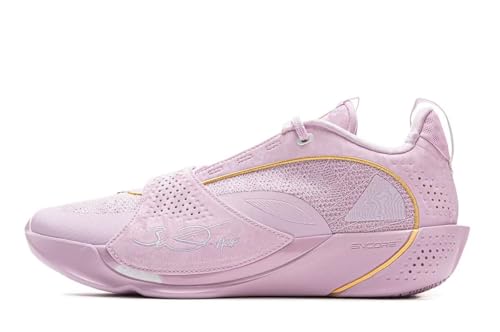 LI-NING Wade All City Series
 The dual-sport pick if you play basketball and volleyball in the same shoe, and the only non-Nike, non-adidas option here worth wiring up. No independent lab testing exists for this one, so the weight and stack numbers are manufacturer claims, not measured.
Best Dual-Sport: LI-NING Wade All City Series
Before anything else, an admission. This is the one shoe on this list I can’t give you lab numbers for. No published weight, no stack height, no traction score. Nobody has cut a pair in half and measured them.
So why is it here?
Because there’s a problem none of the other nine shoes solve. If you play basketball as well as volleyball, or you’re on an outdoor court regularly, indoor-oriented shoes get destroyed. The soft rubber compounds that grip beautifully on a sprung wooden floor shred on concrete in a matter of weeks.
Li-Ning’s All City line is built for exactly that. It’s an all-court shoe with an outsole meant to survive surfaces the rest of this list would not enjoy.
The evidence I can point at is indirect but real. 149 reviews at 4.6 stars, which ties it for the highest customer rating on this page. And the newer All City 14 scored 9 out of 10 in independent testing as an all-round, outdoor-capable performer. I’ve gone with the 13 here because that’s the model with the established review base on Amazon right now, but the line has earned its reputation.
What I’d say plainly is this. If you play indoors, on a proper court, buy something further up this page where I can show you the numbers instead of asking you to trust a reputation.
If you’re splitting time between two sports or two surfaces, this is the pair built for it.
And if you’re playing on grass or sand, that’s a different shoe again, and a separate list.
Recommended Use
I’d recommend the Wade All City Series for players who split their time between volleyball and basketball, or between indoor and outdoor courts, and need an outsole that survives both.
The Good
Built and marketed as an all-court shoe, with an outsole intended to handle outdoor surfaces.
The All City line is well regarded, with the newer All City 14 scoring 9 out of 10 in independent testing.
It fills a genuine gap, since none of the other nine picks here are built for outdoor play.
The Bad
No independent lab measurements exist, so there’s no weight, stack height or traction figure to compare against the rest of this list.
Are Kobes Good For Volleyball?
Yes. Kobes are excellent volleyball shoes, and they always have been.
The line was built around low-to-the-ground stability, a tight midfoot and traction designed for players who cut hard and stop suddenly. That happens to be a near-perfect description of what a volleyball player does on court, which is why you still see Kobes in gyms everywhere years after the line went quiet.
The problem was never performance. It’s supply.
 Nike Kobe 8 Protro (GS)
 The only Kobe on Amazon with a normal price and a real review base, because it is the grade school version. Sizing tops out around 7Y, which converts to roughly a women's 8.5, so check the conversion before you buy.
Here’s the reality right now. Every adult Kobe I could find listed has no customer reviews at all, with prices sitting between roughly $158 and $246. The Kobe 9 Low Protro, the Kobe 9 Elite Low, the Kobe 8 Protro. All of them show zero ratings, and in most cases a single pair in stock.
Nike releases the Protro line in limited drops, most of them through SNKRS, and the pairs that reach general retail go quickly. What’s left lands on resale, at resale prices.
So if you’ve been searching for the best Kobe shoes for volleyball and coming up empty, that’s why. It isn’t you.
There is one workaround, and it’s a good one if your feet are the right size.
The Kobe 8 Protro is still sold in grade school sizing, at somewhere between $28 and $33 against a $120 retail price. It carries the same FN0266 style code as the adult release, though Nike doesn’t publish whether the grade school build is identical underfoot.
The catch is the size range. Grade school runs from a 4 through to a 7, and a GS 7 converts to a men’s 7, or a women’s 8.5. If you wear a women’s 8.5 or smaller, or you’re buying for a junior player, that’s comfortably the best value on this entire page.
If your feet are bigger than that, I’d take the Nike KD 17 further up this page instead. It’s the closest thing here to what a Kobe actually gives you: low profile, properly cushioned, and built for a player who moves along the net rather than just straight up and down.
Final Verdict?
If you want the short version, here it is.
The Nike LeBron 21 is the pick if you want one pair that handles everything and you aren’t counting pennies. It’s the only shoe here with full marks on both stability measures and near-best traction on top of that.
If you’d like those same numbers for roughly a quarter of the money, the PUMA All-Pro Nitro Skybreak is your answer. The only real thing you give up is sizing below a women’s 8.5.
Position by position, I’d send outside hitters and opposites to the LeBron 22 for maximum grip and landing protection, or the LeBron 21 if 15.6 oz sounds like more shoe than you want strapped to your feet. Middle blockers should take the KD 17. Setters and liberos want the Ja 2 Nightmare, or the Giannis Immortality 3 if you’d rather have the same weight with more room up front.
On budget, nothing under fifty dollars gives you more landing protection than the LeBron Witness VIII. If you can stretch a bit further, the D.O.N. Issue 7 is the one to buy when your courts don’t get swept between sessions.
Two special cases worth calling out. Women who want proper sizing without doing conversion maths in their head should look at the Sabrina 2. Anyone splitting time between volleyball and basketball, or between indoor and outdoor courts, wants the Wade All City.
Still not sure? Keep reading. The next section explains what these numbers actually mean and how to weigh them against your own game. Or have a browse through our other volleyball shoe roundup articles.
What To Look For In A Basketball Shoe For Volleyball
Four numbers decide whether a basketball shoe works on a volleyball court: weight, stack height, traction and toe box width. Everything else is preference.
Here’s how to read each of them.
Weight, And Why Your Position Decides It
Setters and liberos should stay under 12 oz. Middle blockers want something between 12 and 14 oz. Outside hitters and opposites can go up to 15 oz if they want maximum landing protection.
The logic is simple. Backcourt players cover more ground and change direction more often, so every ounce costs them. Front court players take dozens of hard approach landings a match, and that extra weight is usually cushioning and structure doing something useful.
The nine shoes here with published weights run from 11.9 oz to 15.6 oz. That sounds like a small spread. Over three sets it isn’t.
Stack Height And Court Feel
Stay under 30mm at the heel if you want to feel the floor. Go above it if you’d rather have landing protection.
Stack height is how much material sits between your foot and the court. On this list it ranges from 24.6mm at the heel to 32.1mm, and the difference in how connected you feel is obvious the moment you switch between two pairs.
The number people forget is the drop, which is the gap between heel and forefoot stack. A shoe with a 3.9mm drop sits flat and lets you sense what’s under you. One with a 9.3mm drop tips you forward and puts you higher off the ground. Neither is wrong, but a libero on a 9mm drop will feel disconnected from the floor, and that’s a real disadvantage when you’re reading a hitter.
Traction On A Wooden Court
Traction is the single most important spec for volleyball, and the one basketball shoes most often get wrong.
Grip is measured as a friction coefficient. Across the shoes here that number ran from 0.71 to 0.95, and the four best all sat at 0.87 or above. Anything in that top group holds on a clean floor and stays usable when it isn’t. Anything at 0.75 or below will let go on a dusty court, usually at the worst possible moment.
Pattern matters as well as compound. Herringbone and circular treads grip in every direction, which suits a sport with as much sideways movement as volleyball. And check the outsole is non-marking before you take it into a gym, because plenty of facilities will turn you away otherwise.
High-Top, Mid-Top Or Low-Top
Cut height matters less than most people assume. What actually holds your ankle is the heel counter and the torsional rigidity of the base, not how far the collar comes up your leg.
The evidence that high tops prevent ankle injuries is a good deal less settled than the marketing implies. Two shoes on this list scored a full 5 out of 5 for both heel counter stiffness and torsional rigidity, and neither is a high top.
Choose the cut you like the feel of, then check the structural numbers underneath it. If you specifically want the collar, we’ve covered high top volleyball shoes and shoes built for ankle support separately.
Toe Box Width And Fit
Basketball shoes run narrower than volleyball shoes, so if you have wide feet you need to check this before anything else.
Measured across the big toe, the shoes here range from 65.3mm to 76.0mm. That’s a gap of more than a centimetre, which is the difference between comfortable and squeezed.
Buy true to size in almost every case. Basketball shoes are built to lock your foot down, so sizing up to create room usually just gives you a sloppy fit and heel slip instead.
Can One Shoe Work For Both Volleyball And Basketball?
Yes, but the question you’re actually asking is about surfaces, not sports.
Volleyball and basketball ask similar things of a shoe. Both involve jumping, hard lateral cuts and sudden stops on a wooden floor. A shoe that handles one will generally handle the other, which is the entire reason this article exists.
What breaks shoes is the surface. Indoor courts are forgiving. Outdoor concrete is not, and the soft rubber compounds that grip best on sprung wood will wear through in weeks on asphalt.
So if you’re playing both sports indoors, almost anything on this list will do the job and you should simply pick by position.
If either sport takes you outside, you need an outsole built for it. The Wade All City is the pair here explicitly designed for all-court use.
There’s a case for the D.O.N. Issue 7 as well, and arguably a stronger one. It lost just 0.9mm of forefoot rubber under abrasion testing, which is measured durability rather than a marketing claim, and it costs around ninety dollars less.
And if volleyball is genuinely your only sport, skip the crossover thinking entirely. Proper volleyball shoes are lighter, grip better on wood, and most of them cost less than the shoes on this page.
Basketball Shoes vs Volleyball Shoes: The Real Differences
They’re closer than the marketing suggests, but three things genuinely differ.
Outsole compound. Volleyball shoes almost always use gum rubber, which is soft and bites hard on indoor wood. Basketball shoes use harder, more durable compounds because the sport gets played on more surfaces. That’s why the traction figures on this page vary so much, and why the softest outsole here also posted the lowest grip score.
Toe protection. Volleyball shoes get a reinforced toe cap, because players drag their toe through the approach and slide into digs. Basketball shoes generally don’t, and that’s the first place a crossover pair starts to fail.
Weight. Volleyball shoes are built lighter as a rule, largely because nobody in the sport has to absorb contact from another player.
What doesn’t differ much is what your body is actually doing. Both sports jump, cut sideways and stop suddenly on a hardwood floor, which is precisely why basketball shoes work as well as they do here. If you want the longer version of that argument, we’ve covered what makes volleyball shoes different in its own article.
So when should you just buy volleyball shoes instead?
If you only play volleyball, you play indoors, and you want the lightest and grippiest thing available, buy them. The Nike Zoom HyperAce line is the obvious place to start, and the women’s HyperAce 2 alone has more than 1,600 reviews behind it.
And if you’re still weighing the whole idea up, can you wear basketball shoes for volleyball goes through it properly.
Basketball Shoes For Volleyball: Women’s Sizing Explained
Here’s the thing nobody tells you. Most basketball shoes are only sold in men’s sizing.
The conversion itself is simple. Women’s US size equals men’s US size plus 1.5. So a women’s 9 is a men’s 7.5, and a women’s 10.5 is a men’s 9.
Where it gets awkward is at the small end. Several shoes on this list stop at a men’s 7, which is a women’s 8.5. If your feet are smaller than that, those pairs simply aren’t available to you, no matter how good the reviews are.
Two shoes here solve that properly. The Nike Sabrina 2 and the adidas D.O.N. Issue 7 are both sold with dual women’s and men’s labels on every single size, starting from a women’s 5, and both offer wide fittings across the range. No maths required.
One more is worth knowing about. The Nike LeBron 22 runs down to a men’s 3.5, which converts to a women’s 5, even though the listing itself uses men’s numbers throughout.
And if you specifically want a shoe designed for women rather than adapted for them, there are three on the market with a real review base behind them: the Nike Sabrina 2, the PUMA Stewie 2 and the Nike A’One.
That’s the entire list. It’s a genuinely underserved market, and worth knowing before you spend an evening searching for something that doesn’t exist.
Basketball Shoes For Volleyball FAQ
Can basketball shoes be used as volleyball shoes?
Yes. Basketball shoes are the most common alternative to volleyball-specific shoes, and for front court players they often work better. Both sports involve jumping, hard lateral cuts and sudden stops on a wooden floor, so the demands overlap heavily. Just check the outsole is non-marking before you take a pair into a gym.
Are volleyball shoes different from basketball shoes?
Yes, in three ways. Volleyball shoes use softer gum rubber outsoles for grip on indoor wood, they add a reinforced toe cap to survive toe drag, and they are built lighter. The underlying movement demands are close enough that basketball shoes remain a genuine option for most positions.
Are the LeBron Witness 8 good for volleyball?
Yes, particularly if you land hard and you are buying on a budget. It has a 32.1mm heel stack, the deepest cushioning of any shoe on this list, with an Air Max unit inside it, for around forty-five dollars. The trade-offs are middling traction at 0.74 and a heel counter that scored only 3 out of 5.
Can I use the Nike Ja 3 for volleyball?
Yes, it will work fine. It is a low, light guard shoe of the same type as the Ja 2 recommended above, and it suits setters and liberos for the same reasons. We have stayed with the Ja 2 on this list because it costs less and has a far bigger review base behind it, but the Ja 3 is a perfectly reasonable choice if you want the newer model.
Will basketball shoes damage a volleyball court?
Not if the outsole is non-marking. Most modern basketball shoes use non-marking rubber, but plenty of facilities still check at the door, so confirm before you turn up rather than after. If in doubt, the product listing will usually say.
What are the best basketball shoes for middle blockers?
The Nike KD 17. Middles jump more than anyone on court but still have to move sideways along the net, so you want something in the 12 to 14 oz range rather than a heavy max-cushion shoe. The KD 17 sits at 13.8 oz with a low-top build and a 26.1mm heel stack, which is the balance that position needs.
Are Jordans good for volleyball?
It depends entirely on the model. Jordan is a broad line covering everything from lightweight guard shoes to heavy lifestyle silhouettes, so the brand name on its own tells you nothing useful. Apply the same four checks as anything else: weight, stack height, traction and toe box width.
How often should I replace basketball shoes used for volleyball?
When the midsole stops rebounding, not when the upper starts looking scruffy. Press your thumb hard into the foam under the heel. If it feels dead and slow to spring back, the cushioning is finished no matter how good the outside looks. Someone training four or five times a week will get through pairs considerably faster than a once-a-week club player.
